Why Every Product Eventually Becomes a Crab
If you can date a OnePlus flagship just by its camera module, you'll feel right at home here. If your biggest tech decision is which iPhone color to pre-order, this one might not be for you.
I was sixteen when I started writing about smartphones on the internet for pocket money. Not reviewing them, I could not afford to buy them, but writing about them. Spec sheets, leaks, comparisons, the kind of content only a certain type of teenager produces at midnight because they genuinely find it interesting. Seven years later I am about to turn twenty two, studying product management, building things, and the way I think about the smartphone space has quietly transformed from fanboy enthusiasm to something that looks a lot more like a case study.
Nothing Phone is the brand that bridges those two versions of me more than any other. And watching what has happened to it recently has been one of the more clarifying product lessons I have had outside of an actual classroom or boardroom.
The Loop I Have Watched Play Out Twice Now
I was around for OnePlus. I mean really around for it, following every forum thread, every invite drop, every Carl Pei interview where he talked about "Never Settle" with the conviction of someone who actually meant it. OnePlus in 2014 felt like a genuine anomaly. Flagship specs at half the price, a clean operating system, no bloatware, a community that felt like it was in on something the rest of the market had not figured out yet.
Then slowly, almost quietly, it stopped being that.
The prices crept up. The software got heavier. The Hasselblad partnership arrived, which is the kind of move you make when you are no longer talking to the person who reads spec sheets at midnight and are now talking to the person who wants something impressive to say at a dinner party. The merger with Oppo made the inevitable official. OnePlus had become exactly what it set out to disrupt.
And then Carl Pei left. And started Nothing.
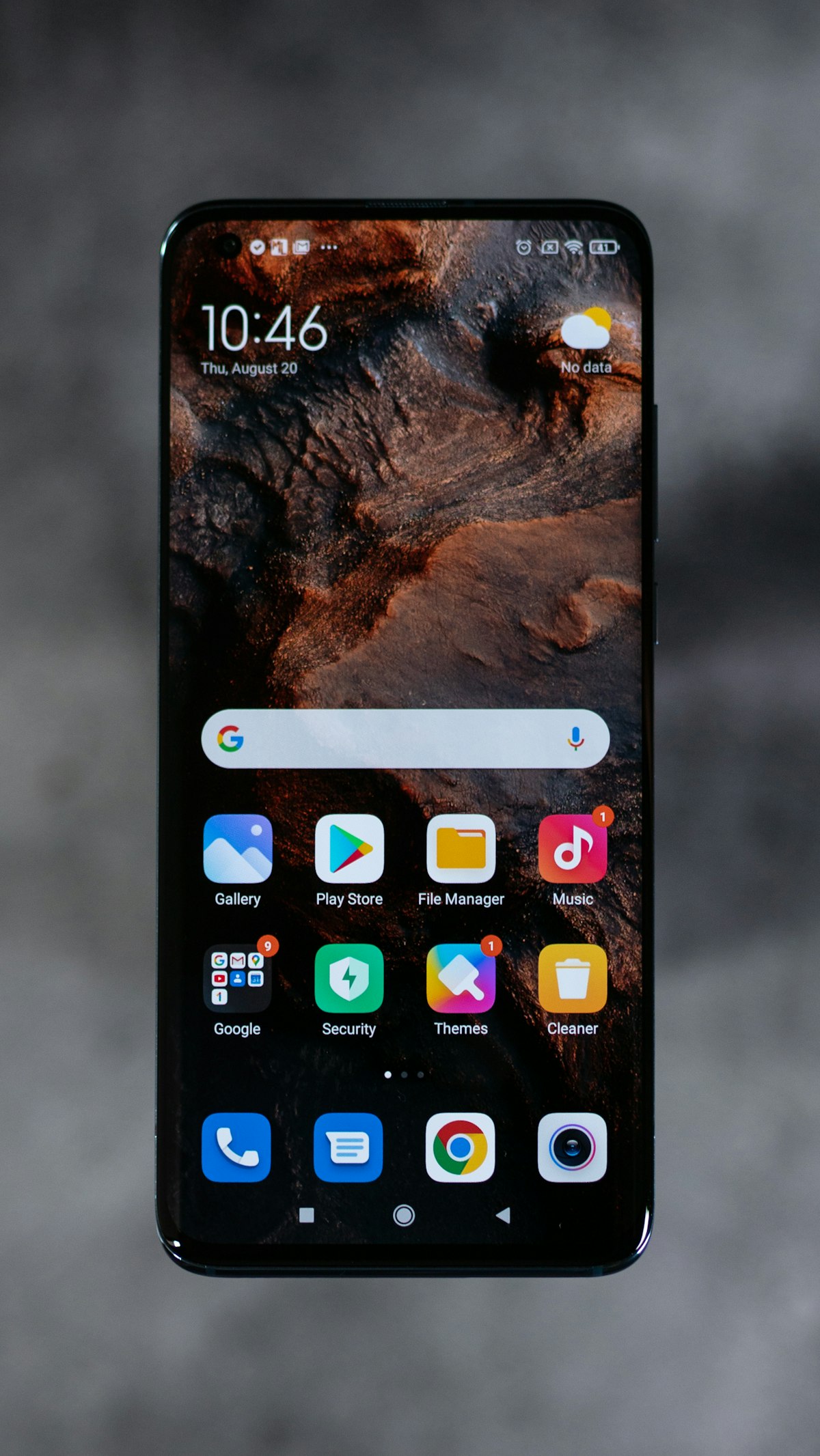
I remember the exact feeling when Nothing was announced. It was that specific tech enthusiast emotion that sits somewhere between excitement and suspicion, because you have been here before and you know how this story tends to end. But the Phone 1 shipped and it was genuinely interesting. The transparent back. The Glyph lights. Nothing OS being everything OxygenOS used to be before it stopped being that. For a while it really did feel like a second act worth believing in.
What Carcinization Actually Is
There is a concept in evolutionary biology called carcinization. Across millions of years, completely unrelated crustaceans, things that share almost no common ancestry, have independently evolved into the same crab-like shape. Not by copying each other. Not by design. But because that particular form is so structurally efficient that nature keeps arriving at it through entirely different paths.

MKBHD used this to describe smartphone design, how every phone eventually becomes the same flat glass rectangle, and he was right. But I think the more interesting version of this idea is not about hardware design at all. It is about what happens to companies.
Every challenger brand that enters a mature market starts with a genuine point of view. A real philosophy. Something that makes the loud minority, the people who actually care, feel like they found something worth caring about. And then the economics of scale start pulling. And the company begins, slowly and then quickly, evolving toward the same shape as everything it once claimed to be different from.
This is not unique to smartphones. It is what happens to every product that starts niche and tries to go mainstream. The specific forces just have different names depending on the industry.
The Forces That Do The Pulling
When a challenger brand is small, being different is free. It is actually your entire distribution strategy. The enthusiast community talks about you, writes about you, defends you in comment sections at midnight. You get attention precisely because you are not like the others, and that attention costs you nothing except the courage to have a real point of view.

But then you raise a serious round. Institutional money arrives, the kind that comes with return expectations attached. And institutional investors are not funding your philosophy. They are funding a revenue trajectory. The two things can coexist early on but they increasingly cannot at scale.
So the prices go up, because margins have to improve. The software gets heavier, because pre-installed apps and lock screen features are revenue. The flagship positioning gets fuzzier, because you need to hit multiple price points to chase volume. Each individual decision has a logic to it. Taken together they quietly sand down everything that made the product interesting to the people who found it first.
Nothing's Phone 3 arrived at $799 running a processor the enthusiast community classifies as a second-tier chip. The Glyph interface that defined the brand's identity got replaced with something the community found gimmicky. Lock screen ads appeared on budget models. Bloatware that was pre-installed and difficult to remove. A 2MP macro sensor that Nothing's own leadership had previously, publicly, called the biggest scam in smartphones.
The carnation had lost its scent. The crab had arrived.
Why This Is A Product Problem, Not A Brand Problem
Here is where my thinking has shifted between sixteen and twenty two. When I was younger, I read this kind of trajectory as a betrayal story. Company sells out. Community moves on. Repeat.
Now I read it as a structural problem that almost no one solves cleanly.
The enthusiast, the loud minority, is the best possible customer for getting a product off the ground and one of the worst possible customers for building a sustainable business around. They have the highest standards, the lowest price tolerance, zero loyalty once something better appears, and an active hostility toward the monetization strategies that actually keep companies alive. They will evangelize for you for free when you are small, and they will document your every compromise publicly when you scale.
The mass market customer, the silent majority, is the opposite in almost every dimension. Higher margins, stickier behavior, more tolerant of the things that pay the bills. But they will never find you on their own. You need the enthusiasts to build the credibility that eventually reaches them.
So you use one group to get to the other. And in doing so you inevitably disappoint the first group. This is not cynicism, it is just the math of how consumer hardware businesses scale. The mistake is thinking you can avoid it entirely.
The smarter question, the one I think more founders and PMs should be asking, is not "how do we avoid this transition" but "which parts of what we built are actually load-bearing for our identity, and which parts can we let converge without losing the thing that made us worth following in the first place."
Nothing had a real answer to that question once. The transparent design was aesthetic but the software cleanliness was the soul. One of those could evolve. The other was the psychological contract with the community that funded your early years, literally in some cases since Nothing raised eight million dollars directly from retail investors, the exact people now watching lock screen ads appear on their phones.
The Cycle Will Run Again
OnePlus betrayed the enthusiast. Nothing filled the vacuum. Nothing is now betraying the enthusiast. Someone is already in a garage somewhere, probably a former Nothing executive, drafting a pitch deck about how boring the industry has gotten and how they are going to build something different.
And the loud minority will migrate. And believe in it. And the cycle will run again.
I used to find this depressing. Now I find it clarifying. It tells you something true about markets, about what differentiation is actually worth, and about the gap between the product you build to get attention and the product you need to build to survive.
The real lesson is not that companies are greedy or that founders sell out. The real lesson is that markets have gravity, and gravity is patient, and if you do not decide very deliberately which parts of your identity are non-negotiable before the pressure builds, the pressure will make that decision for you.
Differentiation everywhere is chaos. Differentiation in the right places, protected on purpose, is the whole game.
Nothing still has time to figure out which is which. I am watching. Probably the same way I was watching at sixteen, just with a slightly different frame around what I am actually looking at.